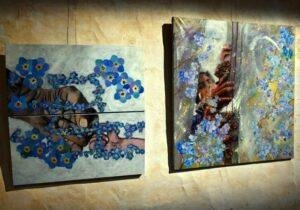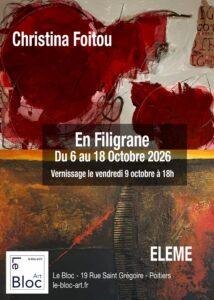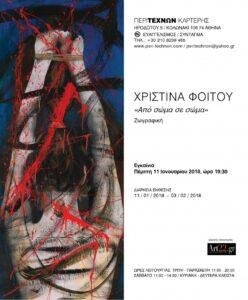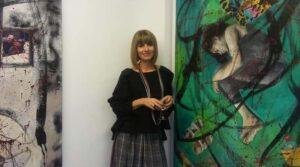
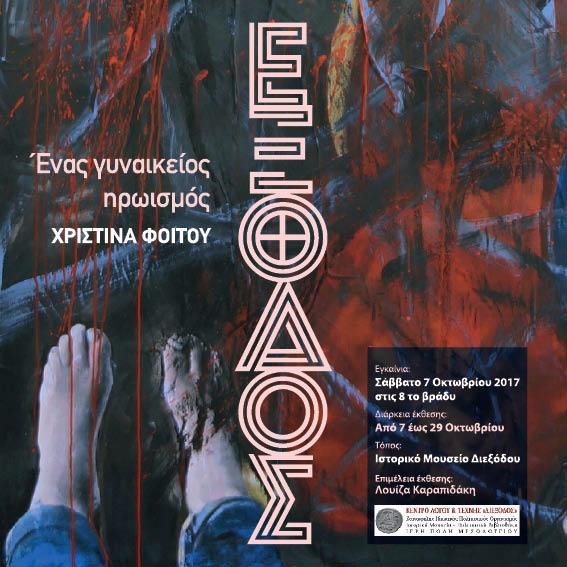
The work of Christina Foitou — artistic creations and interactive installation with performances — entitled “Exodus, a female heroism” has as a basic thematic starting point snapshots from the Exodus of Messolonghi, serving as a tribute to unknown heroic women.
Historical Dialogue & Mise en Abyme
The central depictions of her large-scale works are occupied, essentially and symbolically, by female emblematic forms of historical works. In her paintings, Foitou references iconic masterpieces such as Eugène Delacroix’s "Greece on the ruins of Messolonghi" (1826). The personification of heroic Greece dominates in "Soul and Body", while the self-denial of the mother is captured in "Self-Sacrifice".
The artist essentially incorporates classic works into her contemporary creations — a true mise en abyme — thus emphasizing the semantics and historical weight of her imagery.
"Beyond the historical reference to archetypal images, her compositions refer conceptually to the timeless struggle of women for every form of 'exit'."
Expressionism & Psychological Deadlocks
Her works are characterized by an intense expressionist writing and an excellent attribution of immaterial concepts: pain, anguish, entrapment, tension, and violence. Today's woman, despite the conquest of her rights, continues to be trapped in emotionally dead ends or a kind of psychological compulsion — a process of "acquired weakness" impacting her temperament and fortitude.
Emphasis is given to the anxieties of the woman-mother rising with altruism over her child. Foitou activates every visual means to awaken the viewer: fragmented human limbs, endless mobility of forms, and color tensions dominated by an insurmountable red color as a symbol of blood, violence, and sacrifice.
"The Exodus woman represents the highest ideals: mental fortitude, endurance, self-sacrifice, and the ability to manage pain and death."
Interactive Project: "Decoupling"
The exhibition is complemented by "Decoupling", an interactive installation searching for the woman of the Exodus in modern society. How much has the female temperament mutated? What factors affect or alter it?
In the installation, a doll symbolizes the idealized female existence of Messolonghi — appearing immaculate in white bridal tulle (representing purity). Yet, external traumas have invaded: tight bandages on her body declare the effort to cure, while her passionate mouth has been silenced. Trapped and helpless, she attempts to heal her fresh wounds while a narration questions if redemption is possible.
Audience Participation
Photou opens a participatory dialogue with the public. Visitors are invited to intervene directly in the work using pens, colorful markers, or thread and needle provided at the venue. By writing on pasted papers or sewing onto the installation, every participant leaves their own personal trace and response in the artwork.